
Kids Playhouse Company
Company
Shop By Category
T&Cs
Shop Online
  • Playhouses, tents, swings and learning toys for children 0 to 10
  • Free delivery across the UK on orders over £75
  • Delivered within 7 working days of dispatch
  • Secure checkout by card or PayPal

Wooden Abacus for Kids | Counting Frame | Maths Learning Toy

Wooden Abacus for Kids

£35.99 £42.99 Save £7
  • See Each Number
  • Ready Maths Prompts
  • Hands-On Practice
  • No Batteries Needed

Price: £35.99 £42.99

  • Delivery time: up to 7 working days by tracked courier, after dispatch within 2 working days
  • Free delivery across the UK on orders £75+, otherwise a flat £22
  • Pay by card or PayPal, handled by the payment provider
  • 14 days to change your mind, plus your statutory rights

Often bought together

Product specifications
Recommended Age36 months to 7 years
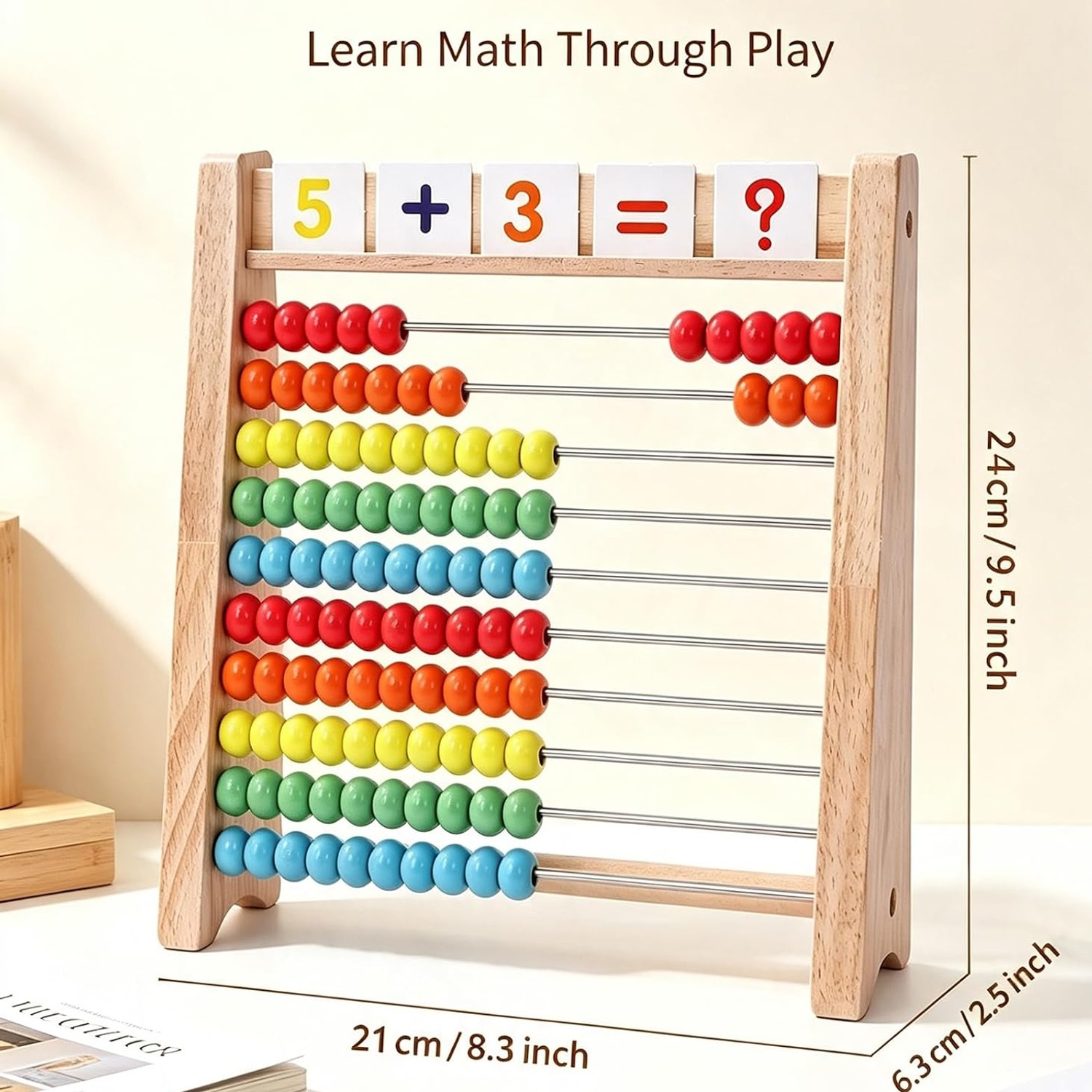
Frame Layout10 rows with 10 beads per row
Total Beads100
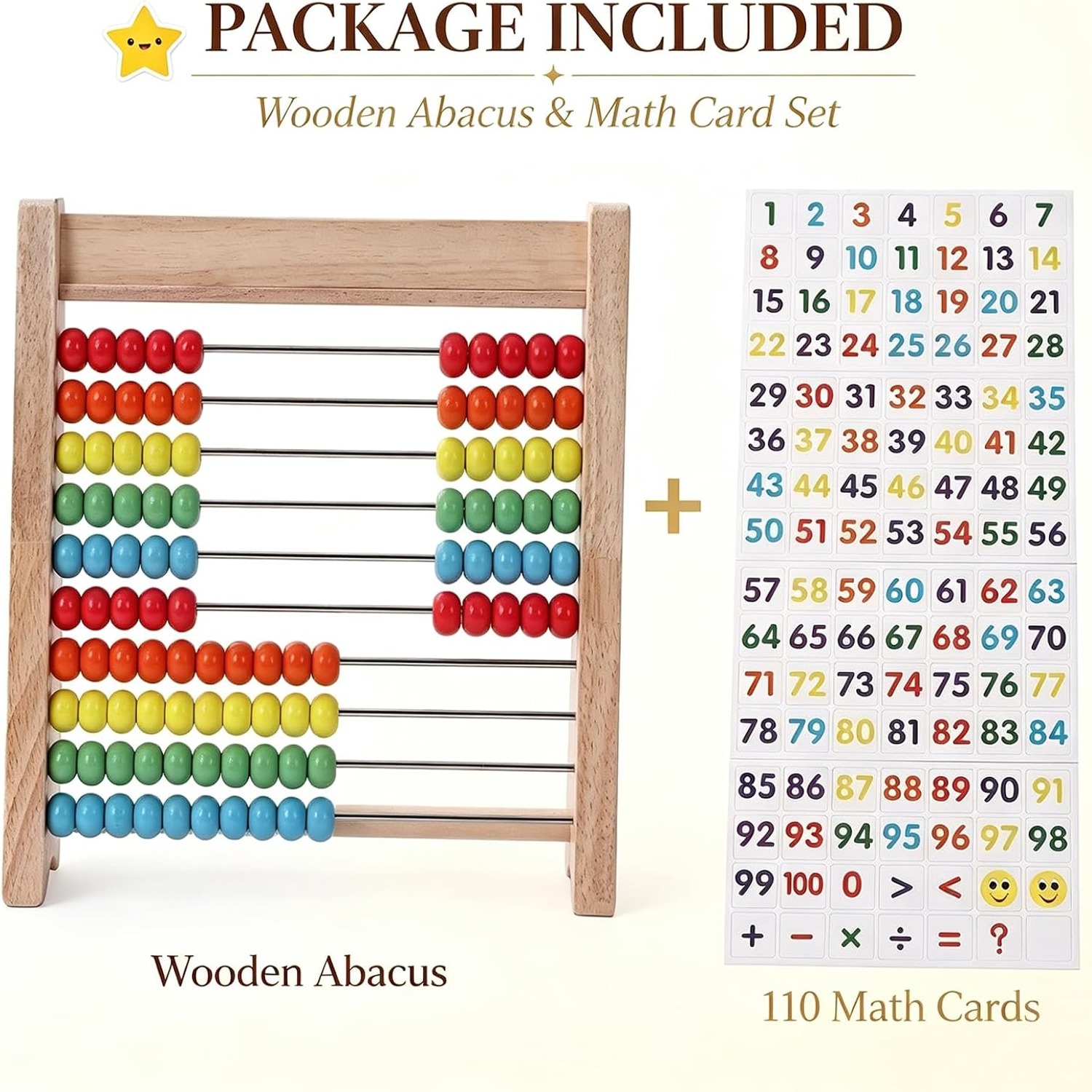
Included Cards110 maths cards
Materials ListedWooden frame and beads, stainless wires, paper cards
Listed ColourRainbow
Dimensions5.8 x 21.1 x 24.1 cm
Weight0.59 kg
OperationManual, no batteries required
Assembly RequiredNo
Intended UseIndoor
Number Of Players1
Educational ObjectivesCounting, maths, hand-eye coordination and motor skills
Weight0.59 kg
Shipping & returns

Tracked delivery anywhere in the UK. It is free on orders of £75 or more, and a flat £22 below that. Allow up to 7 working days in transit after dispatch within 2 working days.

Under the Consumer Contracts (Information, Cancellation and Additional Charges) Regulations 2013 you have 14 days from delivery to cancel for any reason, and a further 14 days to send it back. We allow 15 days from delivery to notify us. We refund the price you paid, including standard delivery. You cover the cost of returning it unless the item is faulty.

If it arrives faulty, damaged or not as described, we put it right at no cost to you under the Consumer Rights Act 2015, return postage included.

Shipping details · Refunds and returns

See Each NumberMove 100 beads across 10 rows to show quantities.
Ready Maths PromptsUse the 110 included cards to guide practice.
Hands-On PracticeGive little hands a way to explore counting and sums.
No Batteries NeededA manual counting frame with no assembly required.

Make early numbers easier to explore with a wooden abacus for kids.

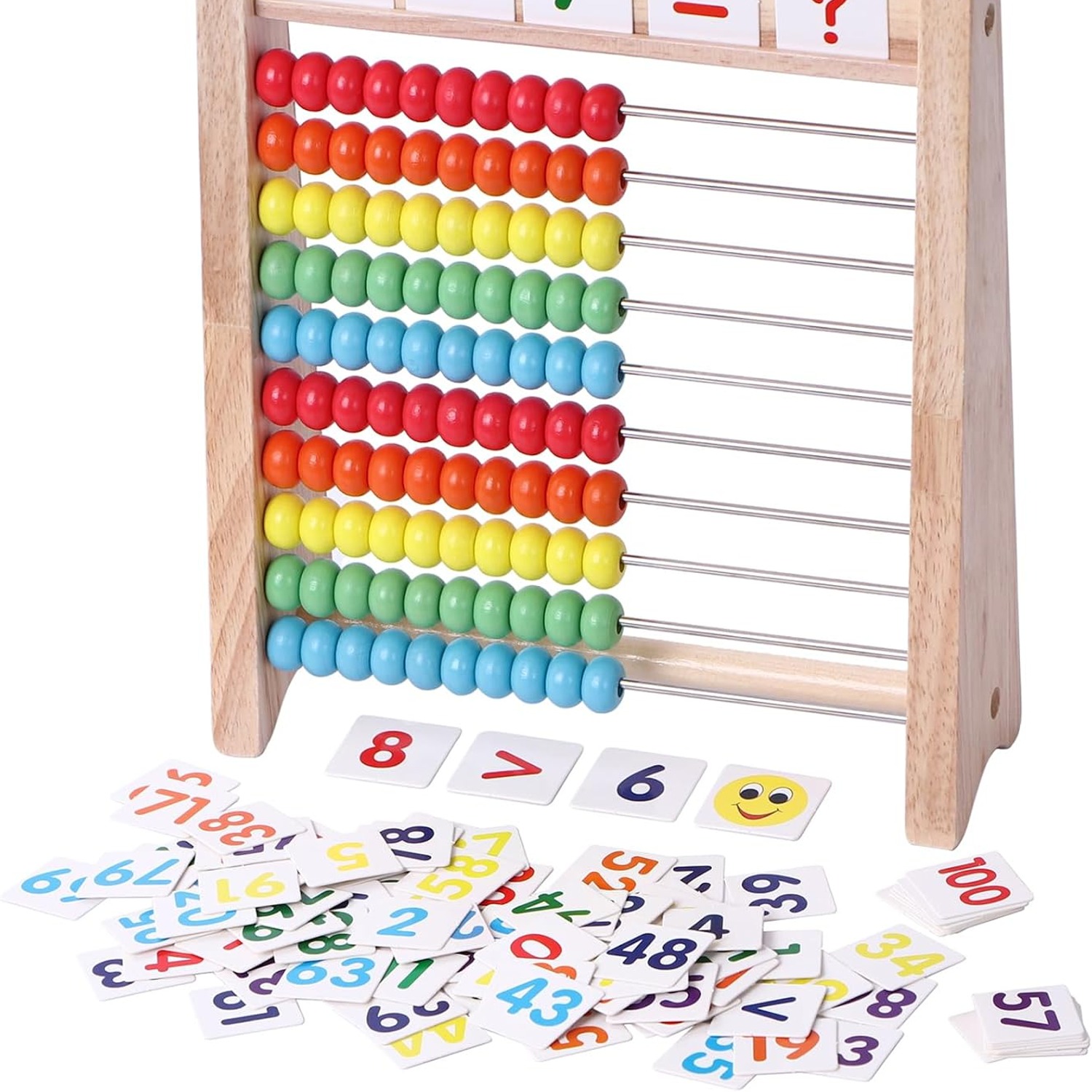
Slide 100 colourful beads and use 110 maths cards to give counting and simple sums a hands-on starting point.

Make quantities visible by sliding colourful beads one at a time.

Explore counting and simple arithmetic with 10 rows of 10 beads.

Add fresh prompts to practice with 110 included maths cards.

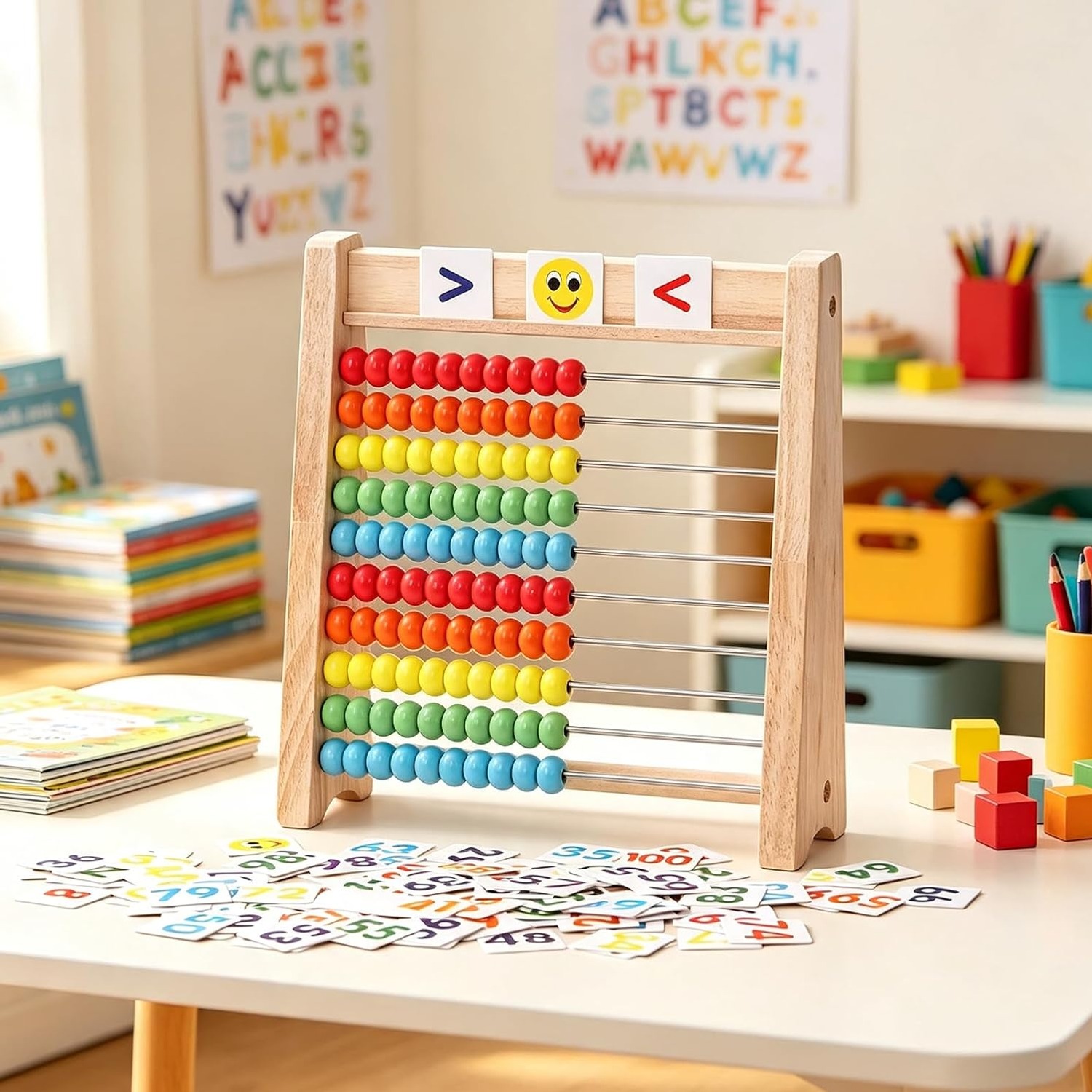
Display a maths card in the frame's card slot while working through a task.

Start screen-free number play without batteries or assembly.

Wooden Abacus for Kids

Counting makes more sense when a child can see what each number stands for. This wooden abacus has 100 colourful wooden beads arranged across 10 stainless wires. Moving one bead at a time gives children a physical way to follow a count and compare quantities.

Wooden Abacus for Kids

The set includes 110 paper maths cards, so practice can move beyond counting alone. A card slot lets you display a task while the child works with the beads. Start with small numbers and introduce simple addition or subtraction when they are ready.

Wooden Abacus for Kids

Designed for manual indoor use, the frame needs no batteries and requires no assembly. Its listed dimensions are 5.8 x 21.1 x 24.1 cm, with a weight of 0.59 kg. Keep it on a suitable work surface with room nearby for the cards.

Wooden Abacus for Kids

The manufacturer recommends this set for children aged 36 months to 7 years. It can serve as a hands-on maths resource at home or in early learning settings, with an adult choosing activities to match the child's current understanding.

Wooden Abacus for Kids

The rainbow beads offer a clear focus for counting practice, while grasping and sliding them gives children a chance to practise controlled hand movements. Use the frame for short, relaxed sessions rather than expecting a child to work through every card at once.

Not sure yet? That is fine.

You can change your mind. Under the Consumer Contracts (Information, Cancellation and Additional Charges) Regulations 2013 you have 14 days from delivery to cancel for any reason, and this store allows 15, plus a further 14 days to send it back. We refund the price you paid, including standard delivery.

If it turns up faulty, damaged or not as described, that is on us. The Consumer Rights Act 2015 covers you, we pay the return postage, and you can have a repair, a replacement or your money back. Read the full detail on our refunds and returns page, or ask us anything before you order.

Frequently Asked Questions

What is this wooden abacus?

It is a manual counting frame with 100 colourful wooden beads on 10 rows. The set also includes 110 paper maths cards for number practice.

How does a counting frame help explain numbers?

A child moves beads while saying each number, giving the count a visible quantity. You can also use separate groups of beads to show how quantities change.

What age is it recommended for?

The manufacturer's recommended age is 36 months to 7 years. Choose activities to suit the child's skills and supervise use.

Is this suitable for babies?

The detailed age recommendation starts at 36 months, even though the broad supplier age field mentions babies and kids. Follow the more specific recommendation rather than treating it as a baby toy.

How many beads does it have?

There are 100 beads in total. Each of the 10 rows holds 10 beads.

What comes with the frame?

The set includes the rainbow abacus and 110 maths cards. The frame also has a slot for displaying a card during an activity.

What are the listed dimensions?

The item dimensions are 5.8 x 21.1 x 24.1 cm. Use these measurements when checking your shelf or activity space, as the supplier also provides a less precise size label.

How much does it weigh?

The listed weight is 0.59 kg. An adult can help place it on a stable surface before play.

What is it made from?

The product details describe a wooden frame and wooden beads on stainless wires. The maths cards are made from paper card, while wood species and finish details are not specified.

What colour is the abacus?

The supplier describes the colour as rainbow. The beads are brightly coloured, but an exact colour sequence is not specified.

Does it need batteries?

No batteries are required. This screen-free learning toy works by moving the beads by hand.

Is assembly required?

The listing states that no assembly is required. Check the frame for damage before giving it to a child.

How do the maths cards work?

Place a selected card in the frame's card slot so the task stays in view. Use the beads to work through the prompt at the child's pace.

Can it help with addition?

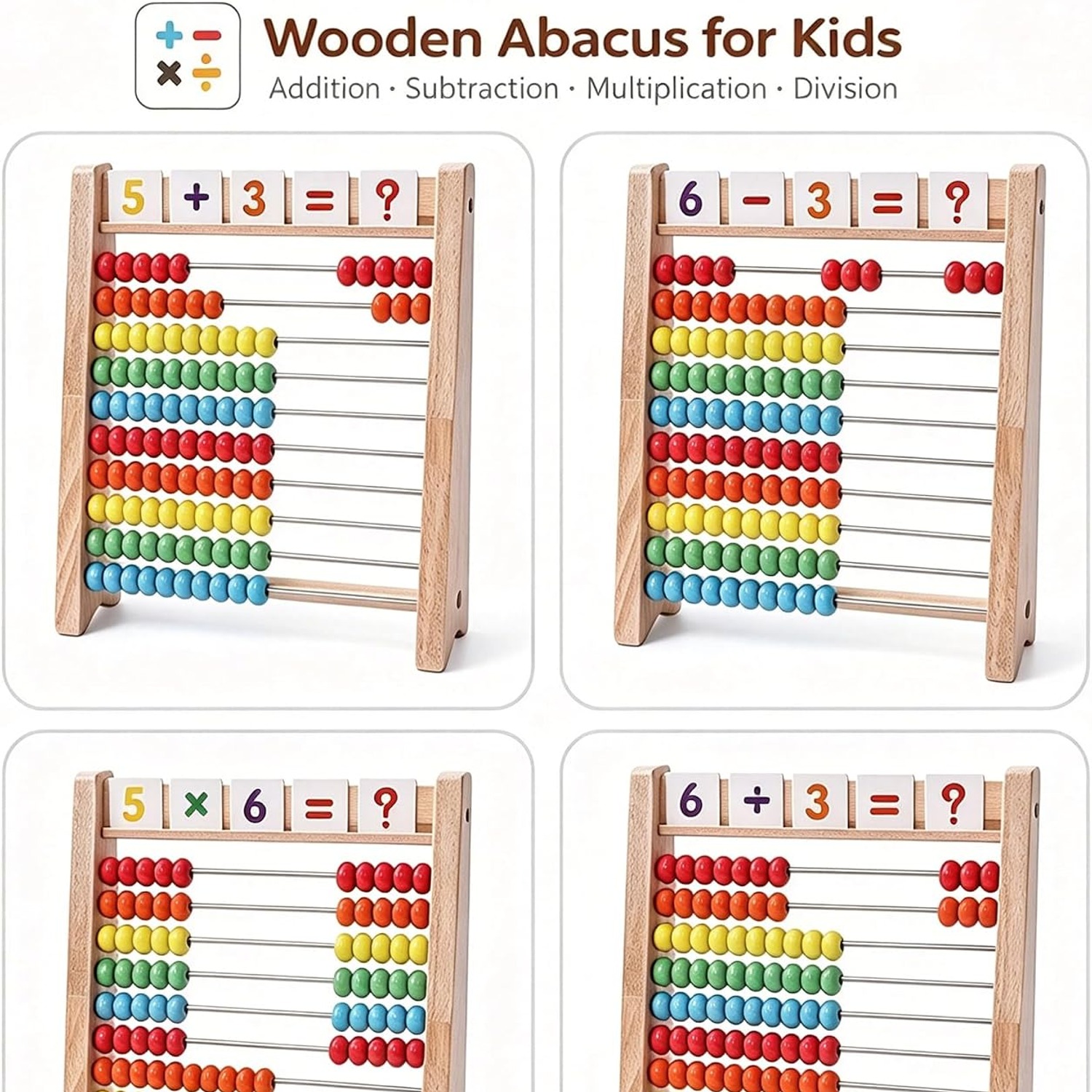
You can show addition by moving one group of beads, then adding another group. Count the combined group together before trying a new example.

Can it be used for subtraction?

Start with a small group of beads and move some back to the other side. Count those left to show what remains.

Can children count to 100 on it?

The 100 beads provide enough counters to represent quantities up to 100. Begin with a single row before using several rows.

Is it an abacus for preschoolers?

It can be used with preschool children within the recommended age range. Start with matching one spoken number to one moved bead.

Is this a Montessori-certified toy?

No Montessori certification is provided in this record. It is a hands-on maths toy listed in the Montessori toys category.

Could I use it as a homeschool maths resource?

Yes, you can use the beads to demonstrate counting and simple sums at home. It is a practice tool rather than a stated complete maths curriculum.

Is it suitable as a classroom counting aid?

The supplier lists classrooms and early learning settings among its suggested uses. The stated player count is one, so plan individual turns for bead-moving activities.

Does it teach hand-eye coordination?

Hand-eye coordination and motor skills are listed educational objectives. Sliding beads provides a chance to practise controlled movements, without guaranteeing a particular result.

Can a child use it independently?

A child familiar with an activity may practise moving and counting beads on their own while supervised. An adult should first explain the task and check that the toy is in good condition.

Is it intended for outdoor use?

The listed use is indoors. Keep the wooden maths toy and paper cards away from rain and damp storage.

How should I clean the frame?

Wipe it with a soft cloth that is only lightly damp, then dry it. Avoid soaking the wood and follow any care directions supplied with the product.

How should I store the maths cards for kids?

Keep the cards together in a dry place away from drinks and wet hands. A separate folder or container can help prevent loss, but storage packaging is not specified as included.

Is it a suitable preschool learning gift?

It may suit a child aged three or older who enjoys counting or hands-on activities. Check the age recommendation and whether the child already owns a similar bead counting frame.

Does it include instructions or a teaching guide?

A separate teaching guide is not specified in the supplied record. The exact range and difficulty of the 110 card tasks are also not detailed.

How long will delivery take?

A delivery lead time is not specified in this record. Check the delivery estimate for your location before ordering.

What warranty or return terms apply?

No product warranty terms are supplied here. Review the storefront's current return policy and any applicable consumer rights before purchase.

What if it is not right for my child?

Check the store's return policy and contact customer support for the available next steps. Keep the item and its included cards together while you confirm any return requirements.

A Parent's Guide to Choosing and Using a Wooden Abacus

6 min read Kids Playhouse Company

When saying numbers is not the same as counting

A child may be able to say the numbers from one to ten without yet knowing what each number means. That is a normal starting point. The next step is connecting a spoken number with an amount they can see and touch.

A wooden abacus for kids gives that amount a clear shape. Each bead can stand for one object. Slide one bead, say one number, then pause before moving the next. The child can watch the group grow instead of trying to hold the whole count in their head.

This frame pairs 100 colourful beads with 110 maths cards. It offers a way to move from free counting to simple number tasks, without a screen or batteries. It is a tool for shared practice, not a promise that every child will learn at the same speed.

What this set includes

The set has a wooden frame with 10 stainless wires. Each row carries 10 wooden beads, giving you 100 beads in total. The supplier describes the colour as rainbow.

There are also 110 paper maths cards. A slot in the frame lets you display a card while using the beads. This keeps the prompt nearby rather than requiring a child to remember the task while looking elsewhere.

The exact card topics and difficulty levels are not detailed in the record. Treat the cards as prompts to review before a session, rather than assuming they follow a graded teaching course. You can start without them and bring them in when the child understands what the beads represent.

No assembly or batteries are required. The frame is intended for indoor use.

How a counting frame works

For a first activity, move all the beads to one side. Explain that beads moved to the other side are the ones you are counting. Keeping that rule clear helps avoid counting beads that are not part of the task.

Ask the child to move a single bead. Say “one” together. Add another and say “two”. Continue only as far as the child is comfortable. A successful count to four is more useful than a rushed count to ten with several skipped beads.

Once the idea is familiar, try asking for a quantity. “Can you show me five?” gives the child a different task from simply repeating a sequence. Let them check their answer by touching or moving each bead once.

A bead counting frame makes it possible to see where a counting error happened. If a bead was skipped, you can return to that point calmly and try again.

Who this wooden maths toy suits

The manufacturer's recommended age is 36 months to 7 years. Although a broad supplier field mentions babies and kids, the specific recommendation starts at three years. Do not choose it as a baby toy on the strength of the broader label.

Within that age range, interest and readiness matter. Some children will spend time moving beads and naming small quantities. Others may be ready to show simple sums. Both are reasonable ways to begin.

The set may suit families looking for a hands-on maths toy or a homeschool maths resource. It can also be used for individual practice in an early learning setting. The listed player count is one, so shared activities work best with clear turns.

No Montessori certification is supplied. Its place in a Montessori toys category should not be read as proof of formal approval or a complete teaching method.

Check the size before choosing

The listed dimensions are 5.8 x 21.1 x 24.1 cm, and the weight is 0.59 kg. Compare those measurements with the space where you expect to use and store it.

The supplier also gives a rough size label that does not match the detailed measurements. The full item dimensions are the more useful reference for planning a place on a desk or shelf. Ask for clarification before purchase if an exact fit is important.

Allow room beside the frame for a few cards. A clear surface makes it easier to focus on the beads in use and keeps paper tasks away from spills.

Think about the child's seating position, too. Place the frame where they can reach it without stretching across other objects. Help position it at the start of the activity.

Start with a small, clear task

There is no need to use all 100 beads at once. For early counting practice for kids, one row offers plenty to explore.

Begin by showing a small number, then ask the child to make the same amount. You might show three beads and let them copy with another row. Count both groups together to check whether they match.

Another option is to ask for one more bead. Start with two, add one, and count again. Later, try one fewer. These small changes give meaning to words that children hear often but may not yet connect with quantities.

Keep your language simple. If the child seems unsure, show the action again rather than adding a longer explanation. A short session that ends comfortably leaves room to return another day.

Move into addition and subtraction

Once one-to-one counting is familiar, the frame can act as an addition and subtraction toy. Use small totals first so the child can follow every change.

To show two plus three, move two beads to the counting side. Pause, then move three more across. Count the full group together. Explain that the two groups now make five.

For subtraction, begin with five beads on the counting side. Move two back and count the three left. Let the movement carry the explanation instead of asking the child to memorise a rule immediately.

Keep the starting side and counting side consistent during each activity. Changing direction halfway through can make a simple task harder to follow. If the child loses track, reset the row and begin again.

Bring in the cards at the right time

An abacus with maths cards gives you ready prompts, but the cards do not need to lead every session. First look through them yourself and choose a task that matches what the child already understands.

Place one card in the slot and work through it slowly. Ask the child what they think it means before reaching for the beads. This helps you see whether the difficulty lies in reading the prompt or working out the quantity.

If a task is too hard, put it aside. Return to a smaller number or demonstrate with the beads first. There is no need to finish a stack of cards to make the session worthwhile.

Keep used and unused cards separate during practice if that helps you stay organised. A storage folder or box may be useful, but no separate card storage is specified as included.

Use it at home or in a learning space

At home, this early numeracy toy can sit alongside everyday counting. Count a few objects, then show the same number on the frame. The link matters more than the number of activities completed.

As a classroom counting aid, it can support a short adult-led task or individual practice. Show the method before handing it over, especially if different children use different ways of moving the beads.

Avoid turning every attempt into a test. Ask how the child found an answer and give them time to demonstrate. Their bead movements may show their thinking more clearly than a spoken answer.

For gifting, consider whether the child enjoys hands-on tasks and whether the family wants a reusable counting tool. The recommended age is a useful first check, but existing toys and current interests matter as well.

Care for the frame and paper cards

Keep this wooden counting toy indoors and store it somewhere dry. Wipe the frame and beads with a soft, lightly damp cloth when needed, then dry them. Do not soak the wood.

Paper cards need different care. Keep them away from drinks, wet hands and cleaning water. Put them together after each session so the next activity does not begin with a search for missing prompts.

Check the frame, wires and beads before use. Stop using it if parts are loose or damaged, and follow any instructions supplied with the item. The record does not provide wood species, finish details or certification documents, so do not assume particular cleaning products or safety approvals apply.

The short version

This rainbow counting frame offers 100 beads, 110 maths cards and a manual way to explore numbers. It is recommended for ages three to seven, with no batteries or assembly required.

Choose it if you want a visible, hands-on starting point for counting and simple sums. Check the dimensions, review the store's delivery and return terms, and begin with an activity small enough for your child to understand. One clear connection between a number and a group of beads is a useful place to start.

Browse the shop

Ready to make counting visible?

Check the age range, frame measurements and included cards to see whether this set suits your child's next step.

Ask us a question

Page summary

The Wooden Abacus with 110 Maths Cards is a manual indoor counting toy recommended for ages 36 months to 7 years. It has a wooden frame, 10 stainless wires and 100 colourful wooden beads arranged in 10 rows of 10. The set includes 110 paper maths cards and a card slot for displaying tasks. Listed educational objectives include counting, maths skills, hand-eye coordination and motor skills. No batteries or assembly are required. Dimensions are 5.8 x 21.1 x 24.1 cm and weight is 0.59 kg. The model number is abacusfl001. Country of origin, GTIN, certification details and warranty terms are not specified in this record.